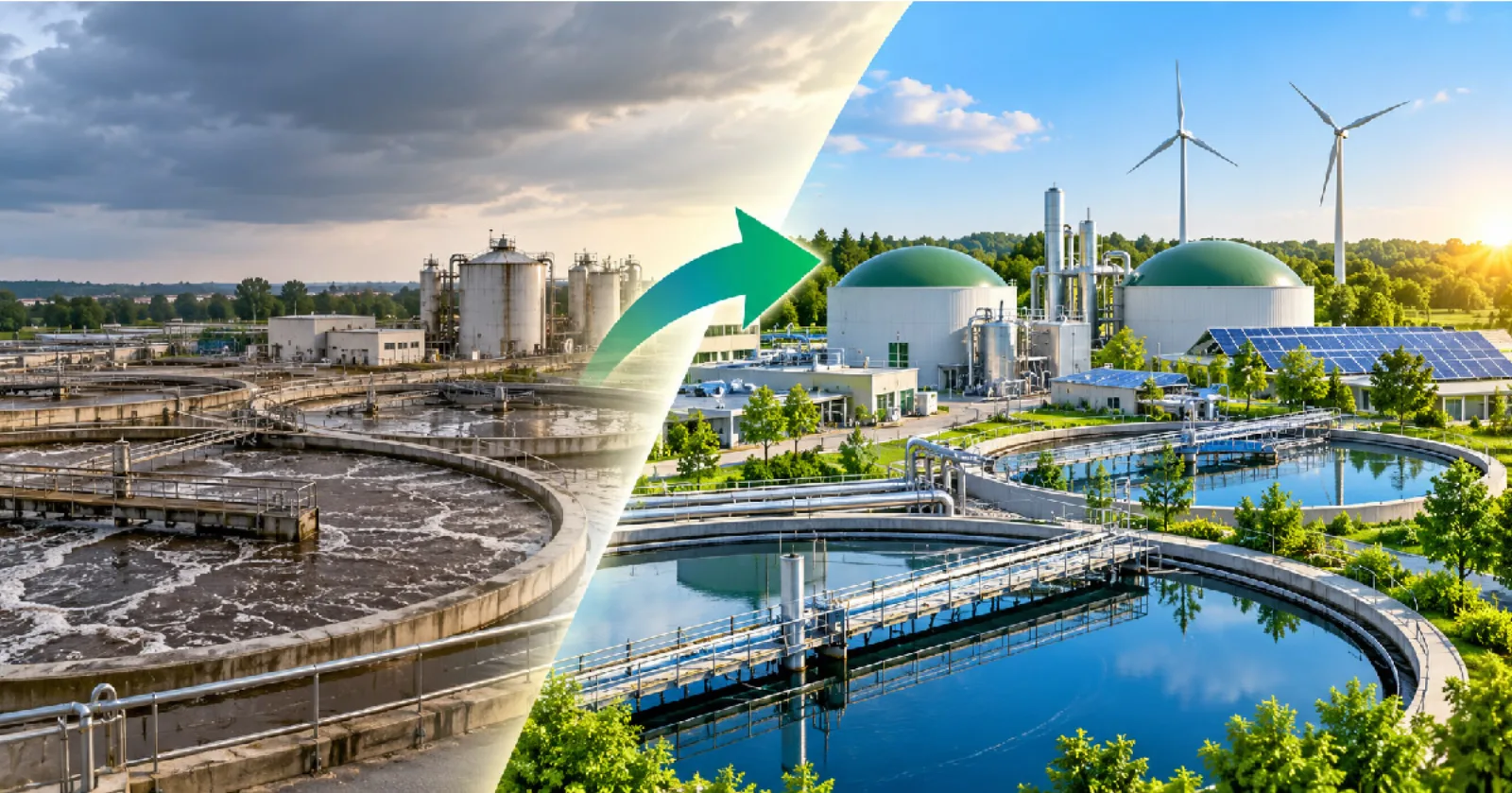
For many industries, the wastewater treatment plant was originally designed to solve one problem: treat wastewater reliably enough to meet discharge or reuse requirements. Energy came later in the conversation. That equation is changing. Rising power costs, tighter water targets and corporate sustainability commitments are forcing plant owners to look at treatment infrastructure differently. Ion Exchange works across water and wastewater systems where these questions increasingly overlap: can an existing facility become more efficient without being completely rebuilt, and how close can it realistically get to becoming an energy neutral wastewater treatment plant?
The answer is rarely found in one new piece of equipment. Energy neutrality usually comes from improving several parts of the plant together — treatment processes, aeration, pumping, sludge management, resource recovery, automation and, importantly, the way operators run the facility.
That makes retrofit planning less of an equipment-shopping exercise and more of an engineering decision.
What Is an Energy Neutral Wastewater Treatment Plant?
An energy-neutral wastewater treatment facility generates or retrieves as much usable energy as it uses over a specified period of time.
This does not imply that all the equipment in the facility works solely on energy created inside it. In reality, energy neutrality can represent a combination of electricity use decrease, biogas production, renewable sources of energy or heat reclamation as well as other technologies used in its processes.
Nevertheless, the first step in achieving energy neutrality is usually reducing energy consumption. By adding solar panels or any other sources of energy to enable compensation for an inefficient plant, one does not eliminate actual issues with its operation.
Start the Retrofit With an Energy and Process Baseline
Prior to any large-scale renovations in wastewater treatment facilities, the teams must analyze how energy is consumed in these facilities. Although aeration is often the largest consumer of electricity in a biological treatment process, it is not the only one. The utilization of pumps that operate away from their optimal efficiency, air-blowers that are too big, over-recirculation of material, old engines, and inefficient sludge disposal systems can add to energy costs over the years without one noticing that.
A useful baseline should examine:
- Energy consumption by major equipment and treatment stage
- Influent flow and organic loading variations
- Aeration demand and dissolved oxygen control
- Pumping head and operating schedules
- Sludge generation and dewatering performance
- Chemical consumption
- Treated-water quality and reuse potential
- Existing automation and instrumentation
- Opportunities for biogas, heat or renewable-energy recovery
This exercise often reveals an uncomfortable truth: the plant may not have a single major efficiency problem. It may have ten smaller ones.
That is exactly why a wastewater treatment plant retrofit should start with data rather than assumptions.
How to Make a Wastewater Treatment Plant Energy Neutral
When managers ask how to make wastewater treatment plant energy neutral, there is a temptation to jump straight to advanced technologies. In many facilities, however, the first gains are found in existing operations.
Optimise Aeration Before Replacing Everything
Monitoring aeration processes is very important, taking into account that even the slightest upgrade can influence the energy consumption of the plant. Some of the practices for saving energy include improved DO management, upgrading diffuser technology, replacing equipment with variable frequency drivers, and adjusting the blower output according to real consumption. The most interesting thing about optimization is that it is significantly less costly than implementation of a brand new biological treatment system.
With regard to this, smart technology improvement means answering two questions: which equipment should be replaced and which needs just to be improved.
Revisit Pumping and Hydraulic Design
Pumps are another common source of avoidable energy consumption.
Changes made over years — additional pipelines, modified tanks or altered treatment loads — can leave pumps operating under conditions that differ significantly from the original design.
During a wastewater retrofit, engineers should assess pump sizing, hydraulic losses, throttling practices and opportunities for variable-speed operation.
Sometimes the biggest efficiency gain comes from fixing the system around the pump rather than buying another pump.
Look Beyond Energy Efficiency to Energy Recovery
The lowering of demand leads the facility to neutrality. Matching the energy back helps to go beyond that.
Wastewater has organic matter, which is a potential energy source. When sludge quantity and composition are satisfactory, anaerobic digestion can transform this load into biogas.
This gas can be used for heating, in boilers or power generation systems depending on the type and size of the facility.
Industrial sites could have chances to utilize waste heat, solar energy or other energy resources in the wastewater treatment processes.
However, energy recovery requires careful assessment. An otherwise potentially interesting project may find it difficult to be commercially successful due to variable feed conditions, wrong maintenance estimation or inability to use the energy.
The best projects use legitimate performance figures instead of attractive theoretical recovery numbers..
Should You Retrofit or Replace the Existing Plant?
This is often the real investment question.
A plant that is structurally sound but operating inefficient equipment may be an excellent candidate for a wastewater treatment plant retrofit. The business case becomes even stronger if the treatment process still meets present and anticipated quality requirements.
Replacement may be a consideration when one has reached a point at which major civil structures are falling apart, when the procedure cannot handle the current loads at any point, when compliance risks are consistently present, or when major modifications would be needed for the next improvement anyway.
There is a third option available.
Retrofitting the waste water channels in stages preserves the facilities while changing the power-consuming facilities gradually as well. A facility can start the process with improving blowers and controls in the facility without or introducing sludge management only to improve the energy-generating systems finally.
This allows avoiding situations in which getting an energy-neutral facility requires an all-or-nothing capital project.
Automation Can Change How the Plant Consumes Energy
One overlooked part of wastewater treatment efficiency is timing.
Often equipment consumes more energy than needed because it works according to its schedule instead of the conditions in the plant. The use of better sensors, control algorithms and monitoring would allow equipment to adjust to changing parameters including flow rate, organic load and treatment demand.
Take a blower that works the same way whether the facility is at its peak production or during the night shift with very low load. The equipment is working perfectly but the strategy is the problem.
Digital monitoring is also a tool for engineers to see whether or not what was promised from retrofitting equipment has become a reality.
Without monitoring it will be impossible to manage energy neutrality properly.
The Business Case Must Go Beyond Electricity Savings
An energy neutral wastewater treatment plant can create value beyond a smaller power bill.
A well-designed programme can also reduce equipment stress, improve treatment consistency, support water reuse, lower sludge-handling costs and increase resilience against future energy-price increases.
For industrial facilities, those benefits may be more valuable than energy savings alone.
Imagine two retrofit projects offering similar electricity reduction. One also improves treated-water recovery and lowers freshwater dependence. The other only reduces power.
Which project deserves priority?
This is where lifecycle economics matter. Retrofit decisions should consider capital expenditure, operating savings, maintenance, water recovery, compliance risk and the expected life of existing assets together.
How Ion Exchange Can Support the Retrofit Journey
Moving an existing facility towards energy neutrality requires more than replacing isolated pieces of equipment.
Ion Exchange combines knowledge on all aspects of wastewater treatment technology, water recovery, process optimization, membrane systems, ion exchange technologies, sludge handling and zero liquid discharge technology, which is particularly helpful in those situations when an operation in one part of the treatment chain impacts energy consumption in other locations.
The process of implementing upgrades starts with the evaluation of the current wastewater treatment plant and identification of energy-consuming technologies, problems, and possibilities of water/resource recovery.
Next, upgrade measures are prioritized based on the feasibility of implementing these changes and financial benefits rather than all available technologies should be used immediately.
This is a much better and more realistic way for operators to go from conventional treatment to treatment with reduced energy consumption and better water recovery rate.
Energy Neutrality Is a Journey, Not One Equipment Upgrade
There is no universal blueprint for turning every facility into an energy neutral wastewater treatment plant.
A high-strength industrial effluent facility will have different opportunities from a municipal sewage plant. A newer installation may benefit primarily from controls and optimisation, while an older facility could justify significant process upgrades.
The important decision is where to begin.
Measure existing consumption. Identify avoidable losses. Improve process efficiency. Evaluate energy and resource recovery. Then build a phased investment plan around measurable operating outcomes.
If your plant is facing rising operating costs, changing wastewater loads or ambitious sustainability targets, Ion Exchange can help evaluate the technical and commercial options for modernising the system.
Talk to Ion Exchange about assessing your existing wastewater facility and identifying a practical pathway towards lower energy use, greater resource recovery and long-term operational efficiency.
Frequently Asked Questions
1. What is an energy neutral wastewater treatment plant?
An energy-neutral facility aims to balance the energy required for treatment with energy saved, recovered or generated through measures such as process optimisation, biogas recovery and renewable power. The exact approach depends on wastewater characteristics, plant design and operating conditions.
2. How to make wastewater treatment plant energy neutral?
Start by measuring energy consumption across aeration, pumping, sludge treatment and other major loads. Reduce avoidable demand first, then evaluate energy recovery, automation, renewable generation and process improvements based on lifecycle economics.
3. What are the main benefits of a wastewater treatment plant retrofit?
A retrofit can reduce energy and chemical consumption, improve process stability, support higher water recovery and extend the useful life of existing infrastructure. It can also be significantly less disruptive than constructing a completely new facility.
4. Which wastewater treatment processes consume the most energy?
Aeration and pumping are often major energy consumers, although their share varies considerably by treatment technology and wastewater characteristics. Sludge treatment, membrane systems and advanced polishing can also contribute significantly to overall demand.
5. Is retrofitting an old wastewater plant better than replacing it?
It depends on asset condition, treatment performance and future capacity requirements. If core infrastructure remains sound, targeted upgrades can be commercially attractive. Plants facing structural deterioration, chronic compliance issues or major capacity changes may require more extensive redevelopment.