

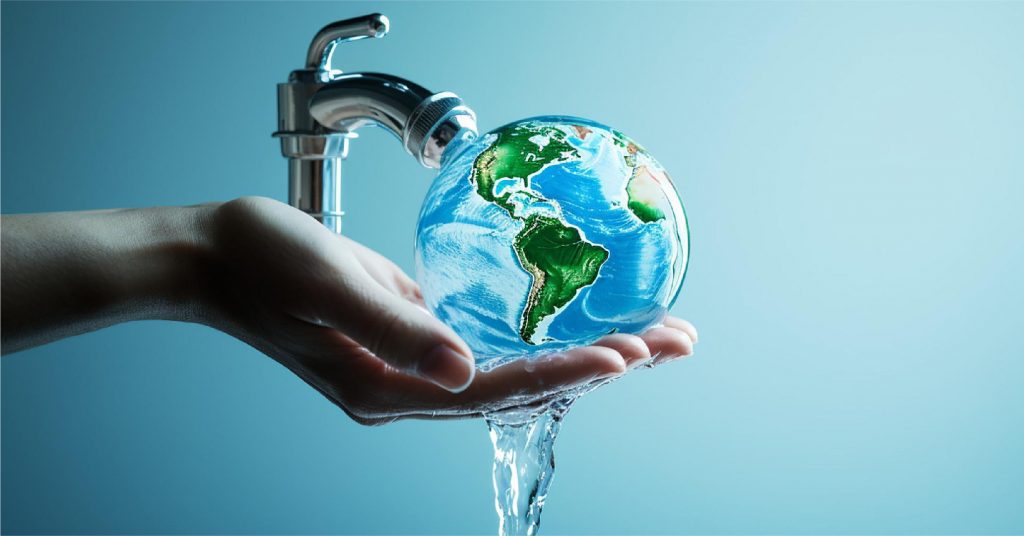
Indonesia is home to abundant rainfall and vast water resources, yet water stress is becoming an increasing concern across many regions. Rapid urbanization, industrial expansion, agricultural demand, and climate variability are placing growing pressure on available freshwater supplies. In this context, water conservation is no longer just an environmental initiative—it is a strategic necessity for long-term water security.
Adopting effective Water Conservation Practices across households, industries, and municipalities is essential to ensure reliable water availability for future generations.
Why Water Conservation Matters in Indonesia?
Despite high annual rainfall, Indonesia faces uneven water distribution, seasonal shortages, and declining groundwater levels in several regions. Key challenges include:
- Over-extraction of groundwater in urban and industrial zones
- Aging infrastructure leading to high water losses
- Increasing pollution of rivers and surface water
- Rising demand from manufacturing, energy, and food production
Without focused action on reducing water wastage and improving efficient water use, these challenges will intensify—impacting public health, economic growth, and environmental stability.
Understanding Water Conservation Practices
Water Conservation Practices refer to strategies and technologies that reduce unnecessary water consumption, improve efficiency, and promote reuse without compromising productivity or quality of life. These practices apply across domestic, agricultural, industrial, and municipal sectors.
Effective conservation focuses not only on saving water, but also on managing it smarter across the entire water cycle.
Key Water Saving Practices for Long-Term Security
1. Efficient Water Use in Industrial Operations
Industries are among the largest water consumers in Indonesia. Implementing efficient water use strategies such as optimized process design, closed-loop systems, and real-time monitoring can significantly reduce freshwater intake.
Advanced treatment and recycling systems allow treated wastewater to be reused for cooling, cleaning, and utility applications—cutting both water costs and environmental impact.
2. Reducing Water Wastage Through Leak Detection
Water losses due to leaks and inefficient distribution systems contribute significantly to wastage. Modern monitoring tools help identify hidden losses, enabling utilities and facilities to take corrective action quickly.
By actively reducing water wastage, organizations can preserve valuable resources while improving system reliability.
3. Wastewater Treatment and Reuse
Recycling treated wastewater is one of the most effective water conservation strategies. Advanced treatment technologies enable safe reuse for non-potable applications such as irrigation, industrial utilities, and landscaping—reducing dependence on freshwater sources.
4. Smart Water Management and Monitoring
Digital solutions and automation play a growing role in conservation efforts. Smart systems track consumption patterns, detect inefficiencies, and optimize water use in real time—supporting long-term sustainability goals.
5. Public and Institutional Water Saving Practices
Beyond industry, promoting water saving practices in commercial buildings, institutions, and communities—such as low-flow fixtures, rainwater harvesting, and awareness programs—helps build a culture of conservation.
Role of Technology in Water Conservation
Technology is a key enabler of modern Water Conservation Practices. Advanced filtration, membrane systems, automation, and data-driven control allow organizations to treat, reuse, and manage water more efficiently than ever before.
In Indonesia, where industrial growth and environmental protection must go hand in hand, these technologies provide a practical pathway to sustainable water management.
Ion Exchange’s Contribution to Water Conservation in Indonesia
Ion Exchange brings decades of experience in delivering integrated water and wastewater solutions that directly support water conservation goals. Our approach focuses on reducing freshwater dependency while maintaining operational efficiency and regulatory compliance.
From Heavy Water Board, Manuguru, for their boron enrichment plant, four PLC-based cascades of ion exchange columns with complete mechanical, electrical, and instrumentation work, for this prestigious project of the Department of Atomic Energy. Another order from this client, for enhancement of their existing 6 x 300 m3/h demineralisation (DM) plant (supplied by us in 1987) withthe addition of a strong base anion unit.
Effluent recycle at Chemplast Sanmar Limited, Mettur, Tamil Nadu. The plant, with a capacity of 300 m3/day, treats cooling tower blowdown and DM effluent for reuse. The treatment scheme comprises high rate solids contact clarifier, ultrafiltration, and reverse osmosis.
For NTPC, Sipat, for their Stage II (2 x 500 MW) unit, a condensate polishing plant of 1350 m3/h with PLC-based operation. The scope includes civil, mechanical, electrical, and instrumentation work. For Jindal Power Limited, Chhatisgarh, for their 4 x 250 MW unit at Tamnar, a total water treatment plant consisting of 3 x 1750 m3/h pretreatment plant, 3 x 100 m3/h PLC based DM plant, 20 x 175 m3/h auto valveless gravity filter, 3 x 11 kg/h and 6 x 200 kg/h chlorination system and 3 x 100 m3/h PLC based ultra filtration system. Third order from Gas Authority of India Limited (GAIL), Assam, for a 25 m3/h iron-specific resin (ISR) based iron removal filter, activated carbon filter, and a MIOX mixed oxidant disinfection system. This is for disinfection of drinking water for the Central Industrial Security Force (CISF) colony at Lakwa, Assam.
Benefits of Adopting Water Conservation Practices
Implementing structured Water Conservation Practices delivers multiple long-term benefits:
- Improved water security during dry seasons
- Lower operating and water procurement costs
- Reduced environmental impact and pollution
- Compliance with evolving environmental regulations
- Greater resilience to climate and demand fluctuations
For Indonesia, these benefits are critical to sustaining economic development while protecting natural ecosystems.
Conclusion
Water security in Indonesia depends not only on natural resources, but on how effectively those resources are managed. Water conservation, supported by practical water saving practices, efficient water use, and proactive efforts in reducing water wastage, is essential for long-term sustainability.
By adopting advanced treatment, recycling, and management solutions, industries and municipalities can transform water conservation from an obligation into a strategic advantage.
Connect with Ion Exchange experts to explore how our water conservation solutions can help you build resilient, efficient, and sustainable water systems—supporting Indonesia’s long-term water security goals.
FAQs
1. How can industries reduce freshwater dependency effectively?
Industries can reduce freshwater intake by implementing wastewater recycling, closed-loop systems, optimized process design, and advanced treatment technologies that enable safe water reuse.
2. What are the most practical water-saving practices for large facilities?
Leak detection programs, real-time water monitoring, reuse of treated effluent, low-consumption fixtures, and process optimization are among the most effective water-saving practices for large facilities.
3. How does wastewater reuse support long-term water security?
By treating and reusing wastewater for non-potable and industrial applications, organizations reduce pressure on freshwater sources and improve resilience during seasonal shortages.
4. What causes rising water stress in Indonesia despite high rainfall?
Uneven regional distribution, seasonal variability, groundwater over-extraction, pollution, and rapid industrial and urban growth contribute to increasing water stress.
5. How can smart monitoring improve efficient water use?
Smart monitoring systems track consumption patterns, detect leaks, and optimize operations in real time, enabling more efficient water use and reduced wastage.